Fistula: Symptoms, Causes, and Surgical Treatment
Fistula: Symptoms, Causes, and Surgical Treatment
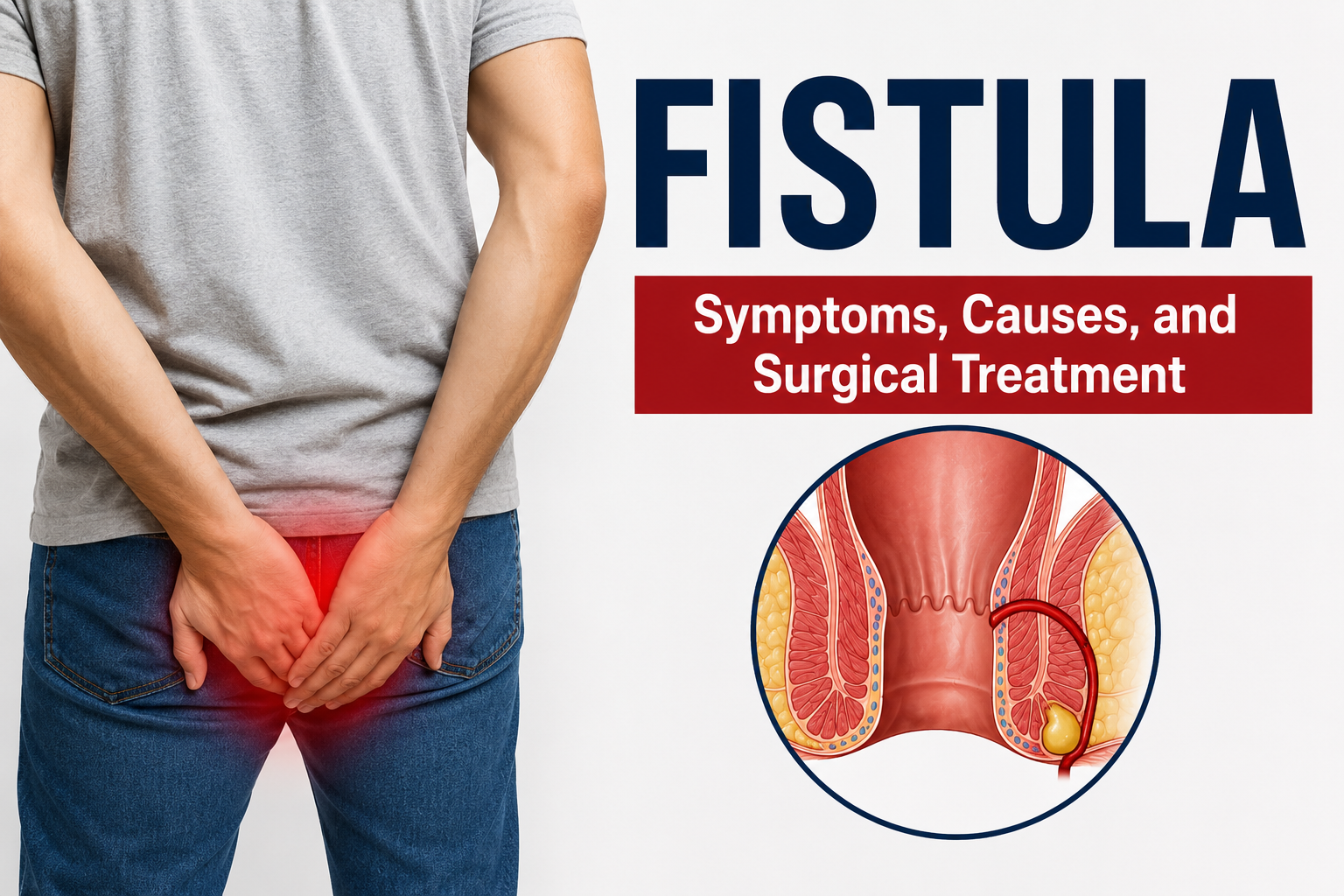
A fistula is an abnormal tunnel or passage that develops between two body parts, most commonly near the anal region. Anal fistula is a painful condition that usually develops due to an infection or abscess around the anus. If left untreated, it can cause discomfort, infection, and complications in daily life. Early diagnosis and proper treatment are essential for complete recovery.
What is an Anal Fistula?
An anal fistula is a small tunnel that forms between the end of the bowel and the skin near the anus. It often occurs after an anal abscess fails to heal completely. The infection creates a passage that may continuously drain pus or fluid.
Common Symptoms of Fistula
People suffering from fistula may experience several uncomfortable symptoms, including:
1. Pain Near the Anus
Persistent pain or discomfort around the anal area, especially while sitting or during bowel movements.
2. Swelling and Redness
Inflammation or swelling near the anus due to infection.
3. Pus or Fluid Discharge
Continuous or recurring discharge with foul smell from a small opening near the anus.
4. Bleeding
Mild bleeding may occur along with irritation.
5. Skin Irritation
The surrounding skin may become red, itchy, or irritated because of continuous discharge.
6. Fever and Fatigue
In severe infections, patients may develop fever and weakness.
Causes of Fistula
Several conditions can lead to the development of a fistula, such as:
1. Anal abscess or infection
2. Crohn’s disease
3. Tuberculosis
4. Injury or trauma near the anal region
5. Previous anal surgery
6. Chronic inflammation
7. Diagnosis of Fistula
Doctors diagnose fistula through physical examination and medical history. In some cases, additional tests may be recommended, including:
1. MRI Scan
2 Ultrasound
3. CT Scan
4. Fistulography
Proper diagnosis helps determine the exact location and severity of the fistula.
Treatment of Fistula
Medication alone usually cannot cure a fistula permanently. Surgery is considered the most effective treatment option.
Surgical Treatment for Fistula
1. Fistulotomy
This is the most common surgical procedure where the fistula tract is opened and cleaned to allow proper healing.
2. Laser Surgery
Modern laser treatment is minimally invasive, less painful, and offers faster recovery.
3. Seton Placement
A surgical thread is placed inside the fistula tract to help drain infection safely.
4. Advanced Flap Procedure
Used in complex fistulas to preserve surrounding muscles and reduce complications.
Benefits of Surgical Treatment:
1. Permanent solution for fistula
2. Relief from pain and infection
3. Faster healing with modern techniques
4. Reduced chances of recurrence
5. Improved quality of life
6. Recovery After Surgery
Recovery time depends on the type of surgery and the severity of the fistula. Patients are usually advised to:
Maintain proper hygiene
Eat a high-fiber diet
Drink plenty of water
Avoid heavy lifting for a few days
Follow doctor’s instructions carefully
Most patients recover successfully with proper care and follow-up.
When Should You See a Doctor?
Consult a doctor immediately if you notice:
1. Persistent anal pain
2. Swelling or pus discharge
3. Recurrent abscesses
4. Bleeding near the anus
5. Fever with anal discomfort
Early treatment helps prevent complications and ensures better recovery.
Conclusion:
Fistula is a common but treatable medical condition. Ignoring symptoms may lead to infection and discomfort. Surgical treatment offers effective and long-term relief, especially with advanced modern techniques like laser surgery. If you experience symptoms of fistula, consult an experienced doctor for proper diagnosis and timely treatment.