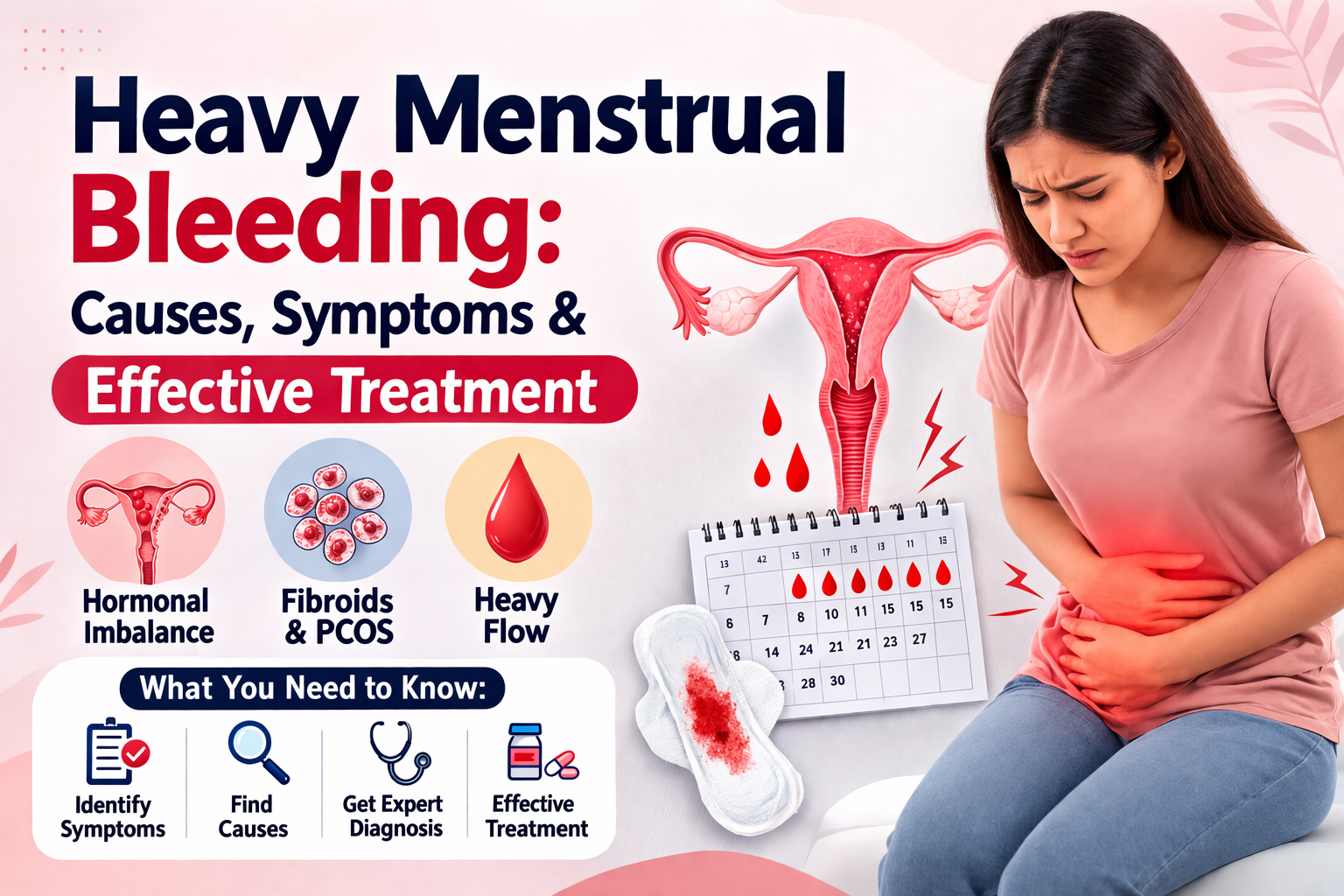
Heavy Menstrual Bleeding: Causes, Symptoms & Effective Treatment
Introduction
Heavy menstrual bleeding, also known as menorrhagia, is a common concern among women but is often overlooked. While occasional heavy periods can be normal, consistently excessive bleeding may indicate an underlying health issue and can affect your overall well-being.
At Health Point Hospital Jaipur, we provide expert diagnosis and advanced treatment options to help women manage menstrual disorders effectively.
What is Heavy Menstrual Bleeding?
Heavy menstrual bleeding is defined as:
- Bleeding lasting more than 7 days
- Soaking through one or more sanitary pads/tampons every hour
- Passing large blood clots
- Needing to wake up at night to change pads
- Feeling weak or tired due to excessive blood loss
If you experience these symptoms regularly, medical attention is recommended.
Causes of Heavy Menstrual Bleeding
Several factors can lead to heavy periods:
1. Hormonal Imbalance
An imbalance between estrogen and progesterone can cause the uterine lining to thicken excessively, leading to heavy bleeding.
2. Uterine Fibroids
Non-cancerous growths in the uterus that can result in prolonged or heavy menstrual flow.
3. Polycystic Ovary Syndrome (PCOS)
Irregular ovulation can cause unpredictable and heavy periods.
4. Thyroid Disorders
Both underactive and overactive thyroid conditions can affect menstrual cycles.
5. Endometriosis
A condition where tissue similar to the uterine lining grows outside the uterus, causing pain and heavy bleeding.
6. Adenomyosis
When the uterine lining grows into the muscular wall of the uterus, leading to heavy and painful periods.
7. Blood Clotting Disorders
Conditions affecting blood clotting can increase menstrual bleeding.
8. Medications
Certain medications like blood thinners or hormonal treatments can contribute to heavy flow.
Symptoms to Watch For
- Severe abdominal cramps
- Fatigue and weakness
- Shortness of breath
- Pale skin (possible anemia)
- Irregular menstrual cycles
Ignoring these symptoms can lead to complications like iron-deficiency anemia.
Diagnosis
At Health Point Hospital Jaipur, diagnosis may include:
- Physical and pelvic examination
- Blood tests (for anemia and hormone levels)
- Ultrasound imaging
- Pap smear
- Endometrial biopsy (if required)
Early diagnosis ensures better treatment outcomes.
Treatment Options
1. Medications
- Hormonal therapy (birth control pills, progesterone)
- Non-steroidal anti-inflammatory drugs (NSAIDs)
- Iron supplements
2. Minimally Invasive Procedures
- Endometrial Ablation – Removes the uterine lining to reduce bleeding
- Hysteroscopy – Helps diagnose and treat uterine issues
3. Surgical Treatments
- Myomectomy (removal of fibroids)
- Hysterectomy (in severe cases)
4. Lifestyle Changes
- Iron-rich diet (green vegetables, dates, jaggery)
- Regular exercise
- Stress management
When to See a Doctor
Consult a doctor if:
- Your periods interfere with daily life
- Bleeding lasts longer than a week
- You feel extremely weak during periods
- You pass large blood clots frequently
Why Choose Health Point Hospital Jaipur?
- Experienced gynecologists
- Advanced diagnostic technology
- Personalized treatment plans
- Affordable and patient-focused care
Conclusion
Heavy menstrual bleeding is not something you should ignore. With proper diagnosis and timely treatment, it can be effectively managed and prevented from causing serious complications.
If you are experiencing symptoms, consult Health Point Hospital Jaipur for expert care and guidance.